
Why I chose these drivers for my DST 2.1
Why I chose the Dayton Audio PC83-4 and MX5-22 for my DST 2.1: the shape I wanted, the specifications and my first experience with the subwoofer.
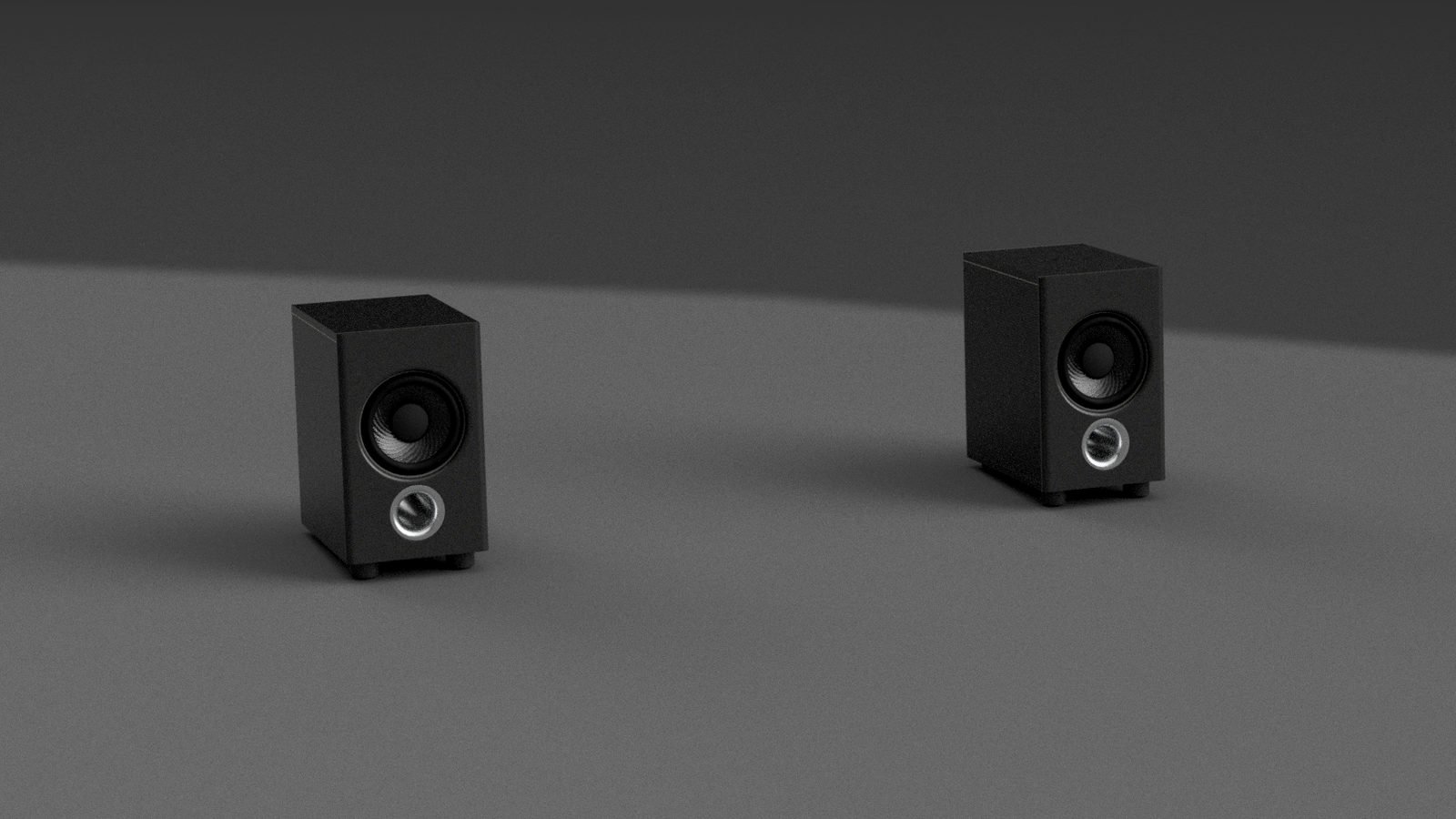
A 2.1 set for a workspace has to do two things at once for me. The satellites need enough midrange to make music sound pleasant and full. The sub needs to add low end when the music asks for it, without me constantly listening to the sub on purpose.
I started with a modest target budget. When I looked at what a small step up made possible, the choice became more interesting. Not because more expensive is automatically better, but because it let me pick a driver that fit the space and the sound I had in mind.
A satellite without a separate tweeter
For the satellites I chose the Dayton Audio PC83-4. I mainly wanted body in the midrange, roughly between 150 and 300 Hz. Extra treble mattered less to me, and I did not want to add a separate tweeter if a single full-range driver could cover the range.
The numbers seemed to fit well. The PC83-4 has an Fs of about 80 Hz, a Qts of 0.54 and a Vas of 1.98 litres. In a ported enclosure of about 1.4 litres, tuned around 80 Hz, it fitted the elongated shape I had in mind for my workspace. The outer dimensions come to about 160 × 100 × 145 mm. Compact, but not just a small box.
I also read a few customer reviews on the product page at SoundImports. Some users are positive about how much the driver can do in a small enclosure. Another review mentions a peaky treble above 10 kHz. Those are experiences in other enclosures and systems, so I treat them as points of attention, not as a prediction of my own result.
The sub that fit the shape
For the sub I chose the Dayton Audio MX5-22. The 5¼-inch size and the specifications made it interesting for a compact enclosure. Fs is 45 Hz, Qts 0.43, Vas 4.9 litres and Xmax 9.3 mm. That combination gave me confidence that the driver could support enough low end in my design without the enclosure having to be large.
The chosen enclosure has a net volume of 9.9 litres and is tuned to 35.5 Hz. That volume also fitted the elongated footprint I originally had in mind. I did not have to turn it into a square cube to get the volume I wanted.
Where things stand
The subwoofer has passed the prototype phase today. The first practical impression matches the calculations and is enough to carry this driver and the current enclosure into the final design. The tuning still needs some attention.
For the satellites, the CAD designs and mock-ups are ready. The next step is to make prototypes of them and judge them together with the subwoofer. Only then can I say something about the complete 2.1 set.
So the choice of these drivers is, for now, backed by the shape I wanted, the specifications and the first hands-on experience with the subwoofer. The satellites still have to earn their place, but on paper the choice fits what I had in mind.
The satellites still have to earn their place, but on paper the choice fits what I had in mind.